Prop trading sounds like an ideal path to professional funding, but the reality is far more selective. Only 0.3-0.5% of prop traders actually receive payouts, largely because pass rates hover between 5-10% and funded payout rates sit around 20%. Meanwhile, the 2024-2025 period saw a wave of firm collapses that left thousands of traders unpaid and out of pocket. Not every prop firm operates with the same standards, safeguards, or intentions. This guide explains what reputation actually means in the prop firm industry, why it matters more than most traders realize, and how to evaluate firms using verifiable signals before you commit a single dollar.
Table of Contents
- What does ‘reputation’ mean for prop firms?
- Industry crises and the cost of poor reputation
- How to assess prop firm reputation: Key trust signals
- Top reputable firms: What sets them apart?
- Why reputation is your real trading edge
- Find and evaluate top prop firms with confidence
- Frequently asked questions
Key Takeaways
| Point | Details |
|---|---|
| Reputation protects profits | Choosing a reputable prop firm minimizes payout denial risks and lost challenge fees. |
| Transparency is essential | Clear rules and payout proof are now standard expectation after industry crises. |
| Industry leaders pay out | Top firms have publicly verifiable payout histories exceeding $1B, setting them apart. |
| Red flags predict failure | Vague rules and delayed payouts often signal future firm collapse or denied profits. |
What does ‘reputation’ mean for prop firms?
Reputation in the prop firm space is not about marketing polish or social media follower counts. It is built from a pattern of consistent behavior that traders can observe, verify, and trust over time. The core pillars are transparent payouts, clearly defined trading rules, operational integrity, and communication that does not disappear the moment a dispute arises.
Consistent rule enforcement, transparent payouts, and operational integrity form the foundation of how traders judge prop firm credibility. When any of these elements breaks down, trust erodes quickly, and that erosion spreads fast across online communities.
Public forums like Reddit and Discord, along with review platforms like Trustpilot, function as informal reputation markets. A single viral complaint thread about withheld payouts can damage a firm’s standing far more than months of positive advertising can repair it. For prop firms, this means reputation is not a static asset. It requires ongoing maintenance through honest communication and fair treatment of funded traders.
Here is what a strong prop firm reputation looks like in practice:
- Verifiable payout proofs posted publicly by real funded traders
- Regulatory compliance or at minimum transparent business registration
- Predictable, unchanging rules that are not retroactively altered to deny payouts
- Active and responsive support that resolves issues within a reasonable timeframe
- Audit records or third-party reviews that confirm the firm’s financial practices
A reputable prop firm is one where traders know exactly what they are agreeing to, can verify that others have been paid, and can reach someone when problems arise.
Understanding prop firm pass rates also helps frame reputation correctly. A firm that is genuinely transparent about its low pass rates and explains why is far more credible than one that oversells success statistics. Reputation, in short, is built from honesty under pressure. Firms that have it attract better traders, retain them longer, and build a more sustainable business over time.
For traders, the practical takeaway is this: before evaluating challenge rules or profit splits, ask whether the firm has a verifiable track record. Start with verifying payout proofs and working backward from there.
Industry crises and the cost of poor reputation
The 2024-2025 period reshaped the prop trading industry in ways that are still being felt. 80-100 prop firms collapsed during this span, representing roughly 13-14% of the entire industry, with widespread reports of unpaid profits and abandoned trader accounts.
The collapse mechanisms were fairly consistent across failing firms:
- Unsustainable business models dependent on challenge fee revenue rather than actual trading profits
- Platform bans from major brokers that cut off the firm’s ability to operate
- Under-capitalization that could not withstand funded trader success at scale
- Sudden rule changes designed to disqualify profitable traders before payout
| Collapse Factor | Impact on Traders |
|---|---|
| Platform bans | Accounts frozen, withdrawals blocked |
| Fee-based model failure | Challenge fees lost, no recourse |
| Rule changes mid-challenge | Disqualification without legitimate cause |
| Firm closure | Funded accounts and profits wiped out |
The financial consequences for individual traders were significant. Average trader losses of $4,000 in fees per person reflect the real cost of placing trust in firms that lacked the operational discipline to deliver on their promises. Multiply that across thousands of affected traders and the industry-wide damage becomes enormous.
The post-crisis reality: Traders who entered the market after 2024 are measurably more cautious. They ask for payout proof before purchasing challenges. They research firm ownership and business history. They check for common red flags like vague drawdown definitions, missing contact information, or no public track record of funded trader success.
Understanding what happens during prop firm closures is now an essential part of trader education. The crisis demonstrated that a firm’s reputation is not just a signal of quality. It is a form of risk management. Choosing a firm with a strong, verifiable reputation meaningfully reduces the probability that you will be left unpaid or locked out of your account.
How to assess prop firm reputation: Key trust signals
Knowing that reputation matters is one thing. Knowing how to measure it is another. Fortunately, there are specific, actionable signals you can check before committing to any firm.
79% of traders now prioritize clear rules and transparent payouts when selecting prop firms, a statistic that reflects the post-crisis shift in trader expectations. Here is a numbered checklist you can apply to any firm you are evaluating:
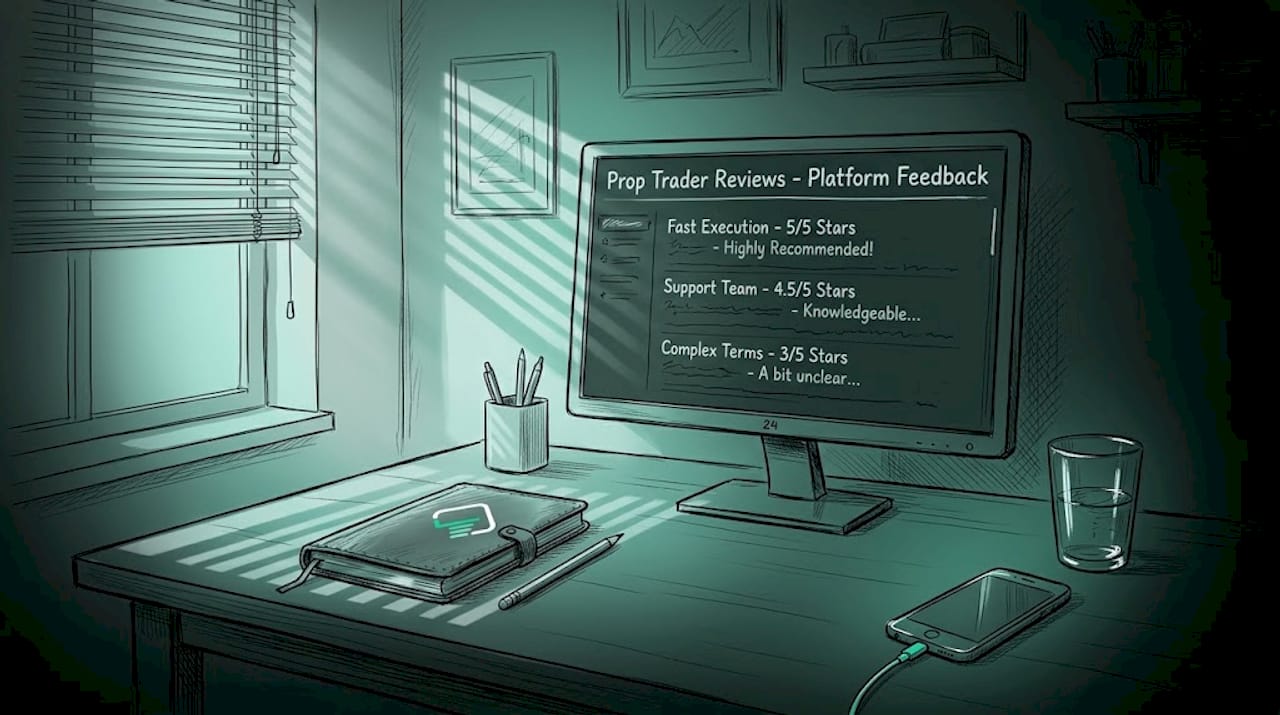
- Check Trustpilot and review platforms. Look for a minimum rating of 4.5 and read recent negative reviews carefully. Patterns in complaints reveal operational weaknesses.
- Request or locate payout proof. Screenshots and transaction confirmations shared by verified funded traders carry far more weight than firm-published claims.
- Read the full ruleset before purchasing. Pay close attention to drawdown calculation methods, consistency rules, and payout eligibility windows.
- Test support responsiveness. Send a pre-sales question and note the response time and quality. Slow or vague responses are a warning sign.
- Search community forums. Reddit threads, Discord servers, and prop-specific communities surface real trader experiences that marketing materials will never show you.
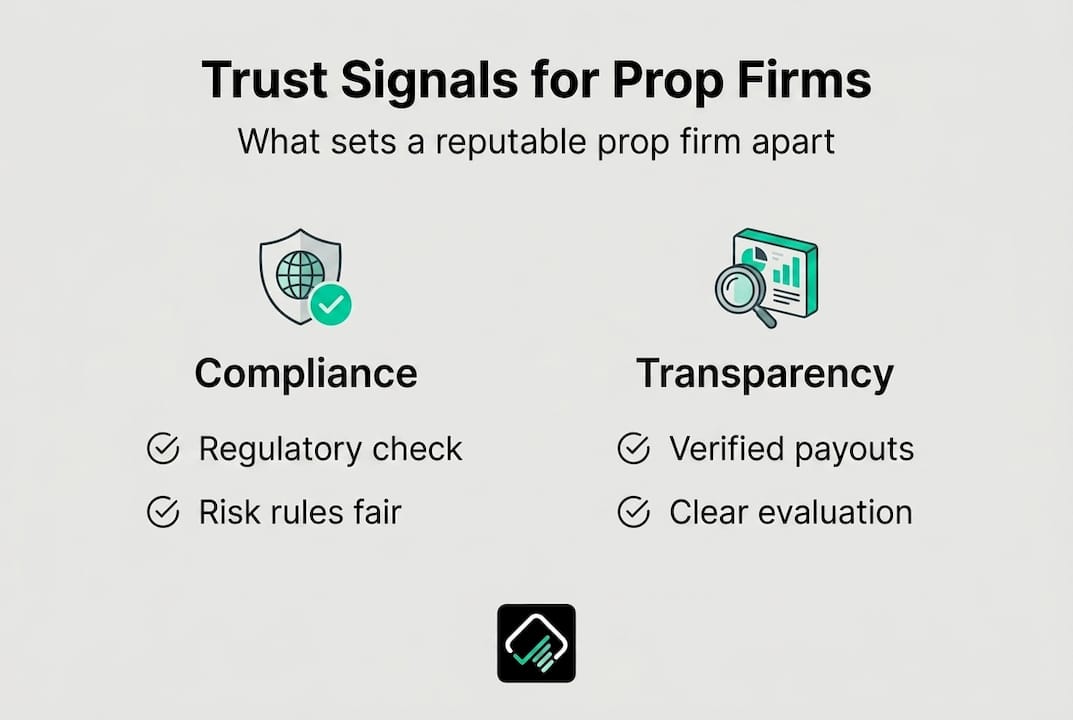
Trustworthy firms demonstrate regulatory compliance, transparent evaluations, verifiable payout proofs, and fair risk rules. These are not just preferences. They are the minimum standard for any firm worth your time and money.
Pro Tip: When checking real payout proofs, look for dated transaction screenshots that show the receiving bank or wallet, the amount, and the firm’s name. Generic screenshots without these details can be fabricated easily.
The most trusted prop firms typically score well across all five checklist points consistently, not just one or two. A firm that passes on Trustpilot but fails on rule transparency is not yet fully trustworthy. Use all signals together to build an accurate picture.
Top reputable firms: What sets them apart?
The difference between industry leaders and failed firms is not just capital. It is the way they handle transparency, communication, and payout delivery at scale.
The most credible benchmark in the industry comes from cumulative payout data. Top firms like FTMO paid $450M+ and Apex $378M+, pushing the industry’s total verified payouts past $1 billion. These numbers are not marketing claims. They are supported by trader transaction records and public audit data that firms actively publish and update.
What separates top reputable firms from weaker ones:
- Published payout statistics updated regularly, not just featured in one-time press releases
- Fast payout speeds averaging 1-5 business days rather than weeks of processing delays
- Responsive support teams with documented resolution rates and named escalation contacts
- Stable, clearly communicated rules that have not changed retroactively since the firm launched
- Community presence including trader testimonials, live stream partnerships, and forum engagement
Transparency in payouts, rules, and operations provides competitive advantage over firms that operate in ambiguity. This is not accidental. Firms that invest in transparency attract traders who are more informed and more committed, which in turn produces a more stable funded trader base.
Pro Tip: When comparing firms, look at how long they have been posting payout data publicly. A firm with six months of consistent payout history is more credible than one that recently started sharing screenshots after a reputation controversy.
You can review and compare best prop firms 2026 based on verified payout records, rule clarity, and support quality. Using a structured comparison removes the guesswork and helps you set realistic expectations before you begin a challenge.
Why reputation is your real trading edge
Most traders spend months refining their strategy and risk management, but relatively few spend the same rigor on evaluating the firm they plan to trade with. That is an oversight with real financial consequences.
Choosing a firm with a proven reputation does not just reduce risk. It changes the entire experience of prop trading. You trade with clarity instead of anxiety. You know your payout is coming because others have received theirs. You are not watching for rule changes that could invalidate your progress. That mental freedom is worth more than most traders account for when comparing challenge fees.
The uncomfortable truth is that the most sophisticated trading strategy in the world delivers nothing if the firm behind the account is poorly run, underfunded, or incentivized to deny your payout. Spending time identifying red flags before signing up is not paranoia. It is the first trade you make, and it is often the most important one.
Experienced funded traders treat firm selection as a core part of their trading process, not an afterthought. When you choose a reputable firm, your challenge fees become an investment in a structured trading career. When you do not, those same fees become a donation to an organization that may never pay you.
Find and evaluate top prop firms with confidence
The research and due diligence process does not have to be time-consuming when you have the right tools in place. At ResponsibleTrading.com, we track payout histories, rule changes, and firm reputations across the industry so you do not have to piece it together from scattered forum posts.
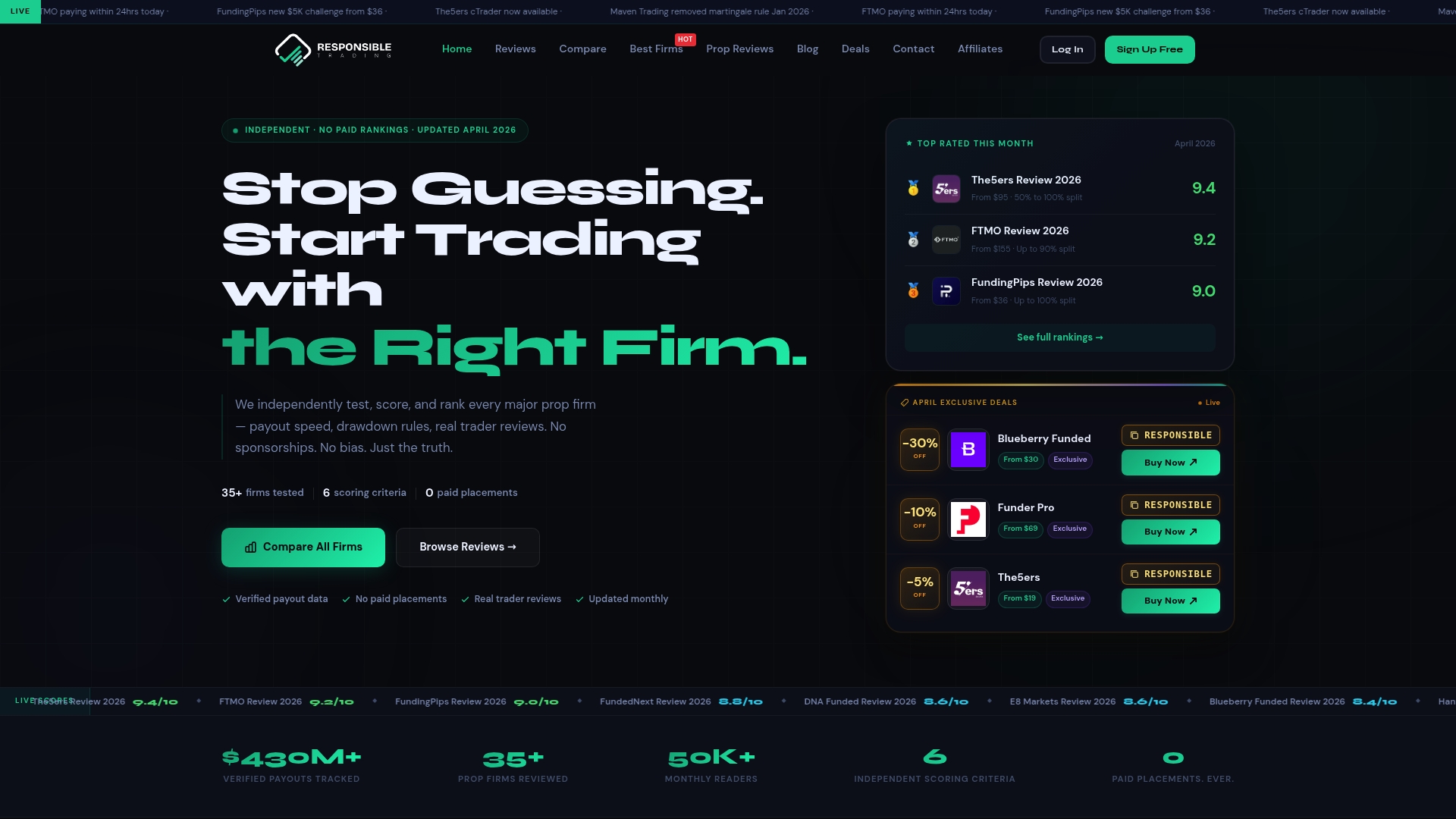
Our expert-reviewed resources are updated regularly to reflect the current state of the market. Whether you are trying to choose the right prop firm for your trading style or looking to compare the best forex prop trading firms side by side, our platform gives you structured data and honest assessments. Use our comparison tools to evaluate firms on payout speed, profit share, and rule transparency before committing your capital.
Frequently asked questions
How can I quickly check if a prop firm is reputable?
Verify payout proofs, check Trustpilot scores, and avoid red flags like payout delays or unclear rules before committing. Look for a Trustpilot rating above 4.5 and active, verifiable funded trader communities.
Why did so many prop firms collapse in 2024-2025?
Most failures stemmed from unsustainable fee-based business models, broker platform bans, and insufficient capital reserves. 80-100 firms collapsed during this period, exposing how fragile many operations were beneath the marketing surface.
What’s the main difference between trustworthy and questionable firms?
Trustworthy firms offer regulatory compliance, payout transparency, and fair rules, while questionable ones stay vague about payouts and modify rules without notice. The difference becomes obvious when you compare their public track records side by side.
Are strict rules a red flag?
Not automatically. Clear rules promote fairness and signal that a firm has a disciplined structure. The real warning sign is vague or shifting rules, not strictness itself.
Recommended
- Prop Firm Reviews – Responsible Trading
- Prop Firm vs Forex Broker: Which Is Better for Retail Traders in 2026? (2026) | Responsible Trading
- Best Forex Trading Platform For Prop Firms: The 2026 Trader’s Guide (2026) | Responsible Trading
- Are Prop Firms Legit in 2026? The Honest Answer From a Funded Trader (2026) | Responsible Trading
- A New Approach to Prop Trading in 2026: Why Structured Development Matters